
Accusative Case 01
I love the Accusative Case!


|
|
|
|
|
|
|
|
|
|
|
|
|
|
|
|
|
|
|
|
|
|
|
|
|
|
|
|
|
|
|
|
|
|
|
|
|
|
|
|
|
|
|
|
|
|
|
|
|
| Beginning Russian Language Accusative Case 01 |
||||||||||||||||||||||||||||||||||||||||||||||||
| * when links are yellow they are active, grey inactive | ||||||||||||||||||||||||||||||||||||||||||||||||
| Nominative Case 01 | ||||||||||||||||||||||||||||||||||||||||||||||||
| Genitive Case 01 | Dative Case 01 | |||||||||||||||||||||||||||||||||||||||||||||||
| LINKS | ||||||||||||||||||||||||||||||||||||||||||||||||
| Nominative Case 02 | Instrumental Case 01 | |||||||||||||||||||||||||||||||||||||||||||||||
| Prepositional Case 01 | ||||||||||||||||||||||||||||||||||||||||||||||||
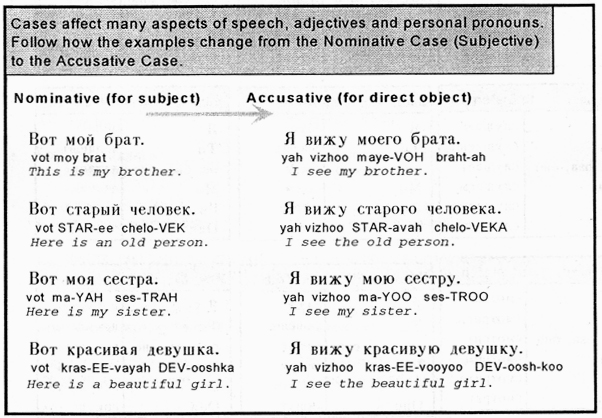
| When you use "me" instead of "I" you are inflecting (sort of) even in English. I see you. You see me. "I" is used when a subject, "me" is used when a direct object. Other samples in English include: He-him, She-her, They-them, We-us. Of course Russian inflections are much more involved! | ||||||||||||||||||||||||||||||||||||||||||||||||
| The Accusative Case is used to designate the Direct Object of the sentence. This is usually a person or object being acted upon, or, as the name suggests, the person being "accused." In the sentence: John saw Mary, the direct object is "Mary." English uses word order to designate the direct object, Russian (Latin, German and other inflected languages) use a "tag" or a marker to indicate this. | ||||||||||||||||||||||||||||||||||||||||||||||||
| The Rules: All feminine nouns are affected, exchange a hard "A" with a hard "Y" (oo), a soft "Ya" becomes a soft "Yu." Only masculine nouns that are animate are inflected. Usually add an "A" to the end. Phonetic Examples: Eto Svetlana i Jim. Vy viditje Svetlanu i Jima? Maria Ivana lubit. Ivan Mariu lubit. Also use this case when traveling towards someplace (same rules apply): Mwee letajem v Kanadu. Mwee v Kanade. We are flying to Canada. We are in Canada. | ||||||||||||||||||||||||||||||||||||||||||||||||
| Ja lublu Vinitelnij Padezh! I love the Accusative Case! |
||||||||||||||||||||||||||||||||||||||||||||||||
| Click on the Play Arrow to hear MP3 samples | ||||||||||||||||||||||||||||||||||||||||||||||||
|
||||||||||||||||||||||||||||||||||||||||||||||||
|
||||||||||||||||||||||||||||||||||||||||||||||||
|
||||||||||||||||||||||||||||||||||||||||||||||||
|
||||||||||||||||||||||||||||||||||||||||||||||||
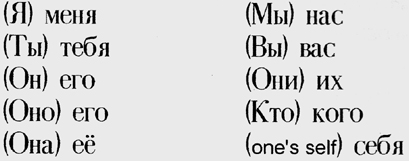
| Nominative forms are in parentheses | ||||||||||||||||||||||||||||||||||||||||||||||||
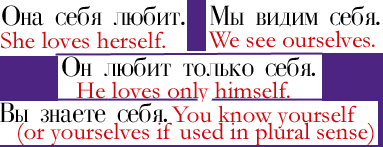
| The Reflexive Pronoun "Sebja" is used to refer back to the subject of the sentence, regardless of the gender of the subject, the form stays the same. Its English equivalents: myself, yourself, himself, herself, theirselves, yourselves & ourselves. Occasionally Russian makes things easier for us! | ||||||||||||||||||||||||||||||||||||||||||||||||
|
||||||||||||||||||||||||||||||||||||||||||||||||
|
||||||||||||||||||||||||||||||||||||||||||||||||
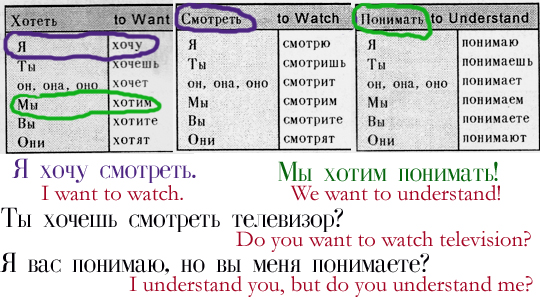
| Using the Accusative Case allows you to use more verbs and communicate more effectively! Don't ignore the INFINITIVE forms in the grey boxes, they can be helpful too! | ||||||||||||||||||||||||||||||||||||||||||||||||
|
||||||||||||||||||||||||||||||||||||||||||||||||
|
||||||||||||||||||||||||||||||||||||||||||||||||
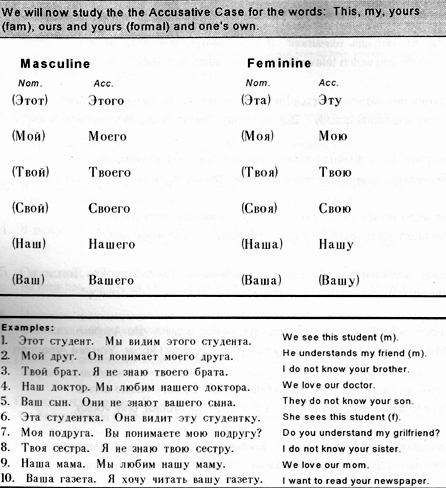
| Some basic samples sentences. | ||||||||||||||||||||||||||||||||||||||||||||||||
|
||||||||||||||||||||||||||||||||||||||||||||||||
|
||||||||||||||||||||||||||||||||||||||||||||||||
|
||||||||||||||||||||||||||||||||||||||||||||||||
| Some sample adjectives and personal pronouns | More samples of personal pronouns | |||||||||||||||||||||||||||||||||||||||||||||||